Find your symptom before you unravel anything
Beginner crochet mistakes usually look worse than they are. A crooked edge, an off stitch count, a chain too tight to work into, none of these mean you have to pull the whole thing out. Most common mistakes trace back to one identifiable cause, and once you spot it, the fix is often a few rows of correction rather than a full restart.
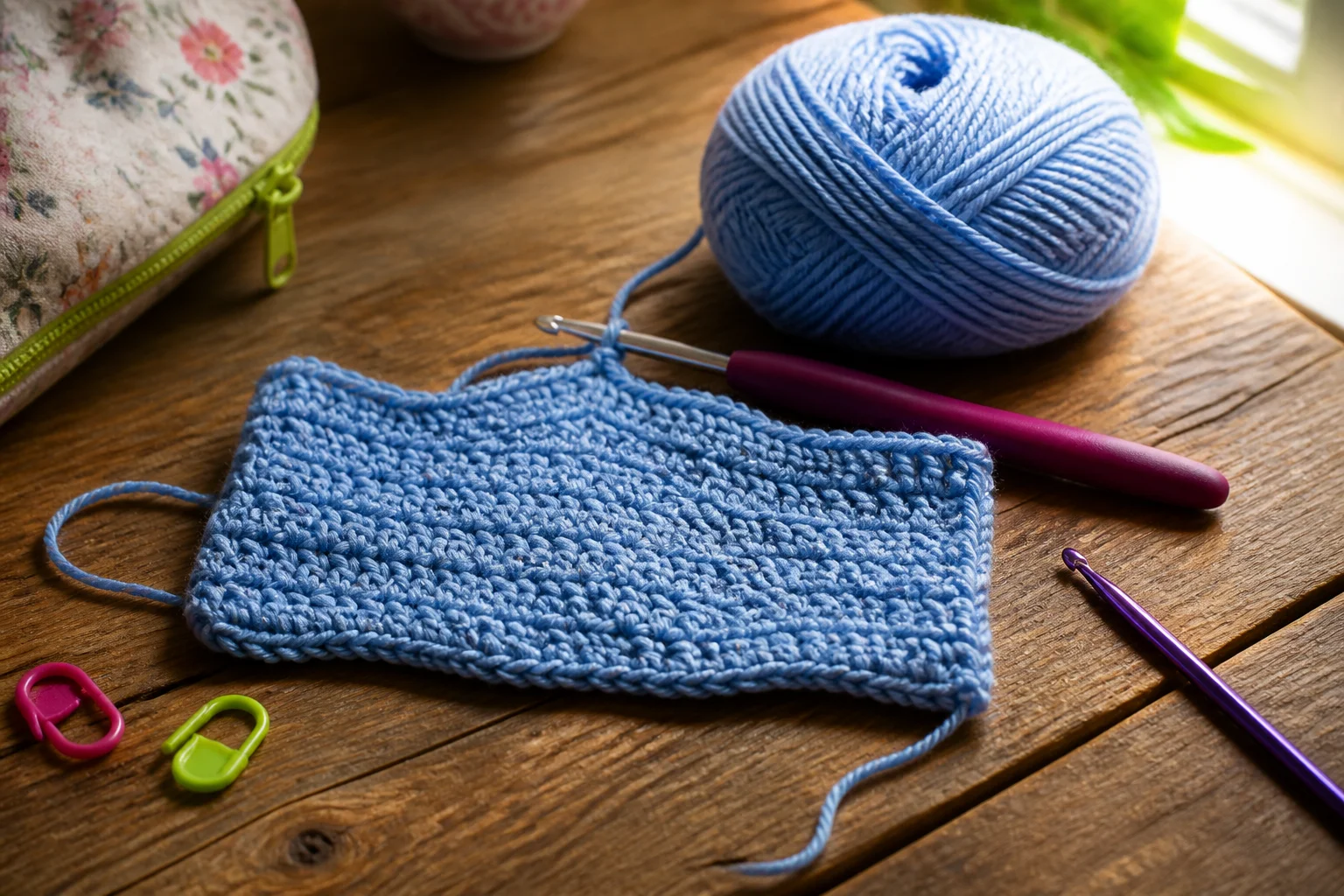
Undoing crochet stitches is called frogging. First, compare your stitch count and pattern instructions to locate the error. If you pause while inspecting, secure the current live loop with a removable marker. To unravel, remove that marker and your hook, then gently pull the working yarn, undoing one stitch at a time until you reach the error. Stop with the last correct stitch intact and put the hook into the remaining live loop. If you need to pause again, secure that loop before setting the work down. Complex stitches or colorwork may need more careful recovery, so follow a tutorial for the particular pattern.
Use this list to jump to your symptom below.
- Stitches are hard to see against the yarn: Mistake 1
- Fabric feels stiff or loose: Mistake 2
- Starting edge curls or puckers: Mistake 3
- Rows look uneven: Mistake 4
- Stitch count changes row to row: Mistake 5
- Edges widen or narrow unexpectedly: Mistake 6
- Texture shows up in the wrong place: Mistake 7
- Pattern instructions seem inconsistent: Mistake 8
- Finished size doesn't match the pattern: Mistake 9
- You keep frogging more than needed: Mistake 10
Getting your materials and starting chain right
1. Choosing yarn that makes stitches hard to see
Symptom: you can't tell where one stitch ends and the next begins, and counting feels like guesswork.
Likely cause: very dark yarn, fuzzy or textured yarn like chenille or boucle, and busy multicolor yarn all hide the stitch loops and the V shape you need to hook into.
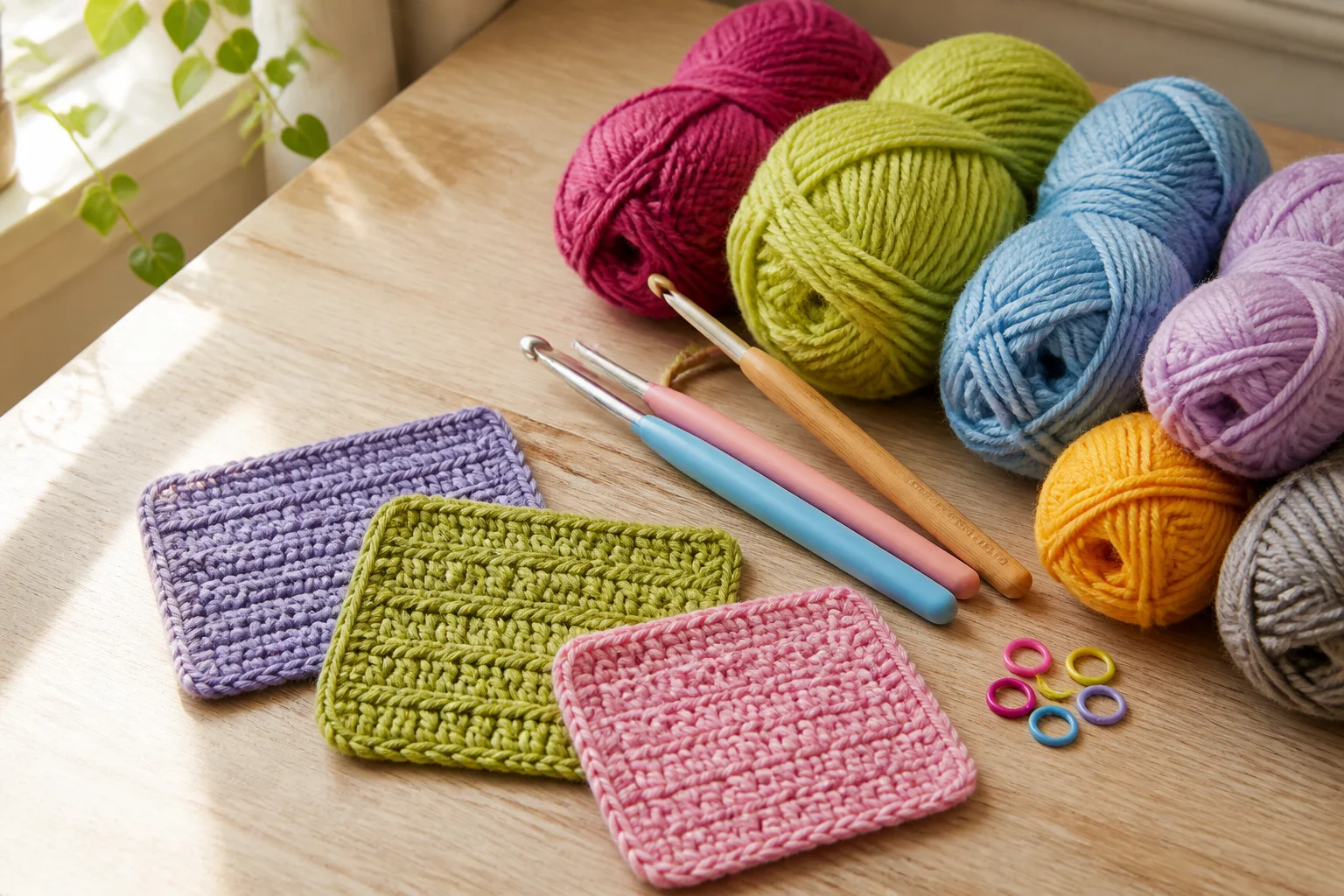
Fix: switch to a smooth, light-to-medium-colored yarn while learning a new stitch or pattern. Worsted weight cotton or acrylic in a solid pale color makes the stitch structure much easier to see.
Prevent it next time: this is a practice choice, not a ban on dark or textured yarn. Once you know the stitch, go back to the yarn you actually want. Our best yarn for crochet guide covers picking yarn for specific projects.
2. Using a hook and yarn pairing that fights the project
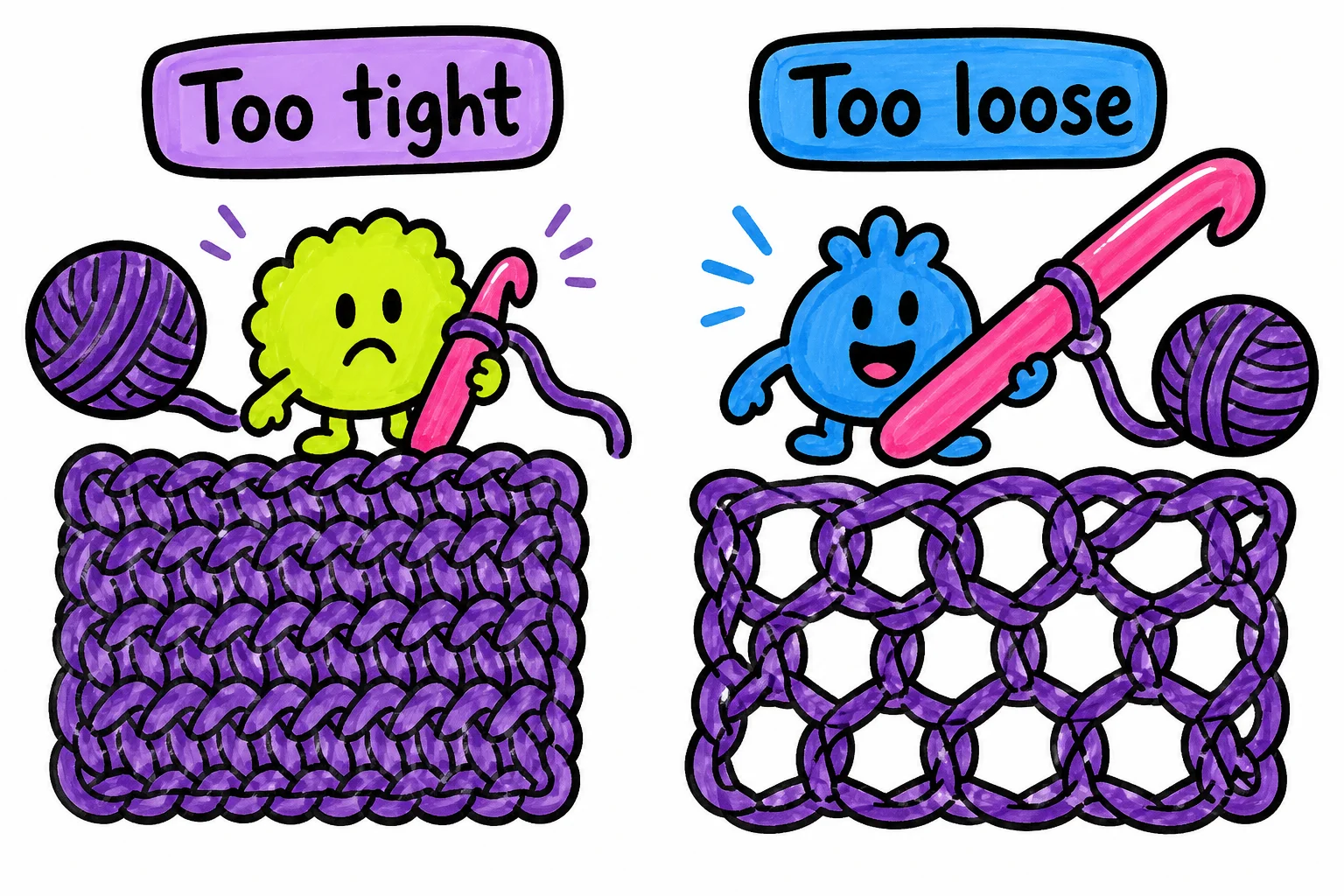
Symptom: your fabric is stiff and hard to move your hook through, or loose and full of visible holes.
Likely cause: the hook is too small for the yarn (stiff, dense fabric) or too large (loose, holey fabric). Yarn labels and patterns suggest a hook size, but that's a starting point, since tension varies by hand.
Fix: try a hook size up or down from what's suggested and see how the fabric feels. Check our types of crochet hooks guide if you're unsure what sizes exist or how they're labeled.
Prevent it next time: swatch with a new yarn before starting the full project.
3. Making the foundation chain too tight
Symptom: the starting edge bows, puckers, or is nearly impossible to work your hook into on row one.
Likely cause: gripping the chain too firmly as you make it.
Fix: loosen your grip, or chain with a hook one size larger than the pattern calls for, then switch back for the rest of the project. This adjustment depends on your own tension, not everyone needs it.
Prevent it next time: slide your hook through a few loops before moving on, to check the chain isn't too tight.
Fixing tension, stitch counts, and turning chain confusion
4. Crocheting with inconsistent tension
Symptom: some stitches are loose and loopy, others tight and squat, and rows look bumpy instead of even.
Likely cause: your grip, yarn feed, or pace shifts as you work, especially over a long session or when you set the project down and pick it back up.
Fix: work a short practice swatch, relax your hands, and take breaks. You're not aiming for machine-identical stitches, just closer consistency over time.
Prevent it next time: check in with your grip every few rows, and swatch new yarn before starting a full project.
5. Gaining or losing stitches at the row edges
Symptom: your project widens, narrows, or the edge looks stepped.
Likely cause: skipping the first or last stitch narrows the row; working two stitches into one spot, or treating the turning chain as a stitch when it shouldn't be, widens it.
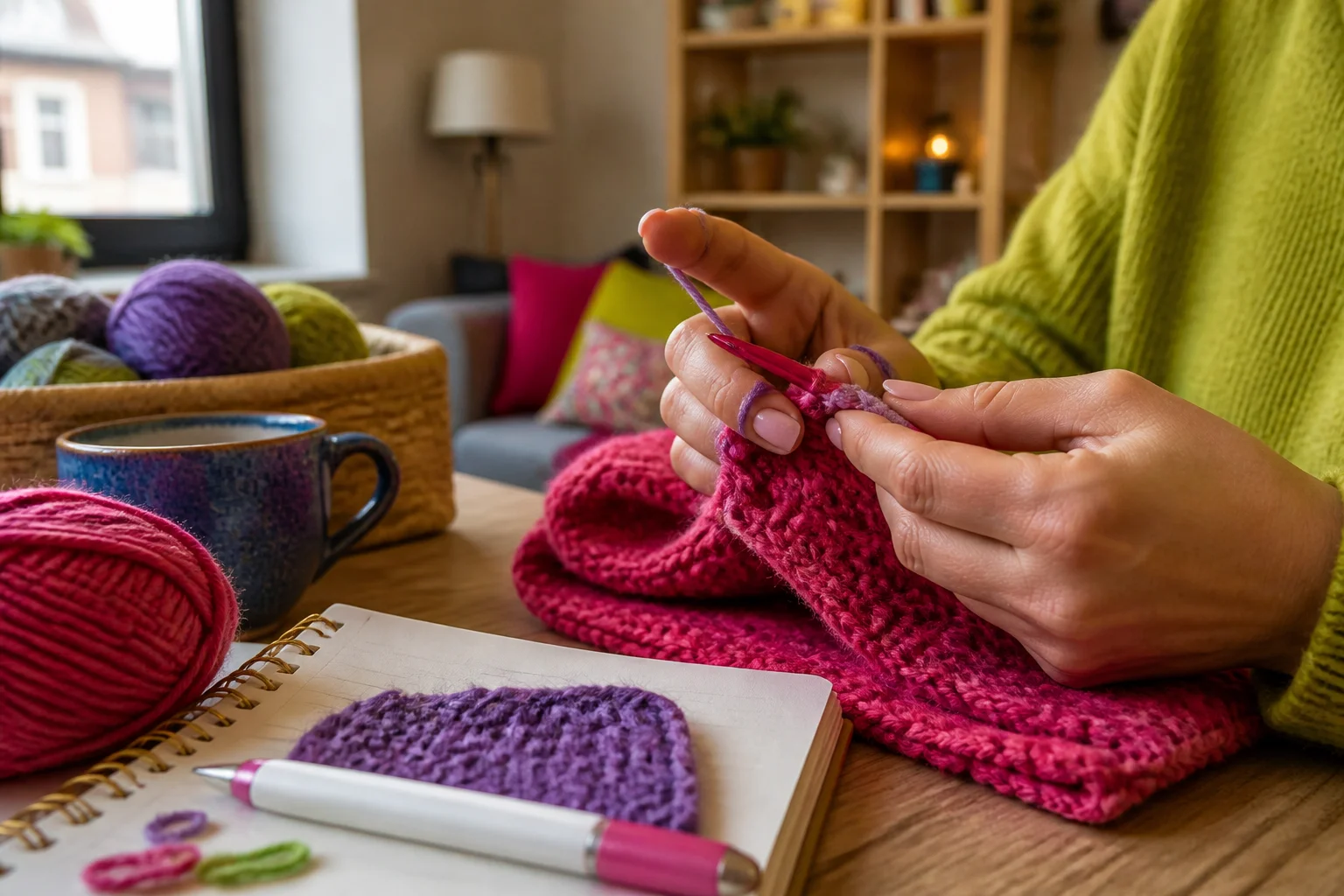
Fix: count stitches at the end of every row, and place removable markers in the first and last stitch. If the count is off, the Craft Yarn Council's troubleshooting guidance recommends ripping back to the row where the count first changed. Blocking won't fix a true stitch-count error.
Prevent it next time: keep counting every row until it becomes automatic.
6. Assuming every turning chain counts the same way
Symptom: your edges look jagged, or your stitch count shifts row to row for no clear reason.
Likely cause: whether a turning chain counts as a stitch depends on the pattern and the designer's choice, not a universal rule.
Fix: check whether the turning chain counts as a stitch. If it counts, it usually replaces the first stitch, and the last stitch of the following row goes into its top. If it does not count, you usually work into the first actual stitch and skip the turning chain on the return row. Follow any specific edge instructions in your pattern. Mark the first and last counted stitch, moving the markers each row. Our crochet stitch dictionary helps with stitch names and pattern conventions.
Fixing stitch placement, terminology mix-ups, gauge, and unraveling too much
7. Putting the hook into the wrong part of the stitch
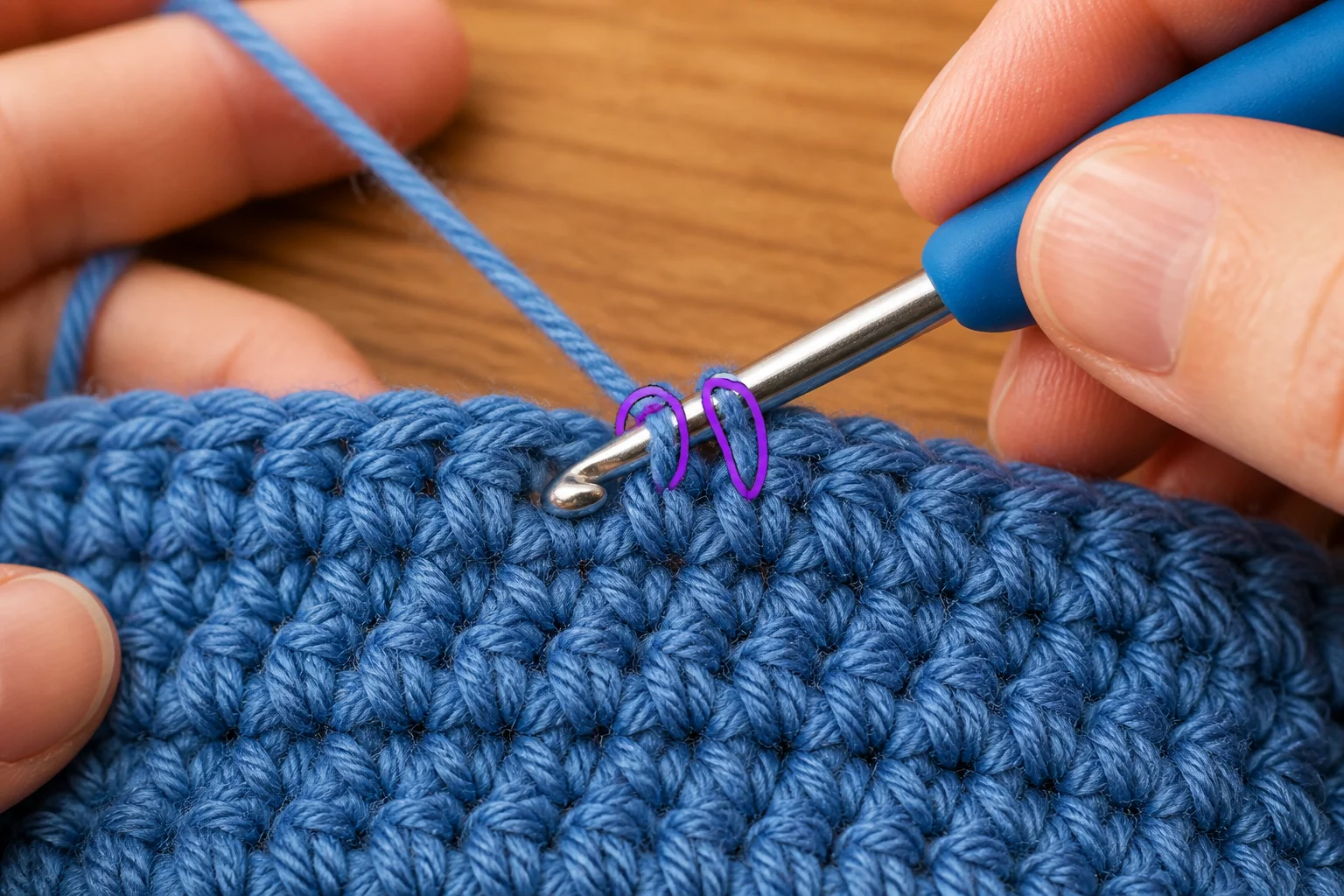
An unexpected ridge can mean you worked into one top loop when the pattern expected both. For ordinary stitches worked into the previous row, the usual placement is under both strands of the V at the stitch top. Check for instructions such as front loop only, back loop only, a post stitch, or working into a chain space, all of which intentionally change placement. If you used the wrong insertion point, undo the affected stitches and rework them as directed. Look closely at the next stitch before inserting your hook, especially after turning.
8. Mixing up US and UK crochet terms
Your stitches are unexpectedly tall or short, even though you followed the abbreviation. US and UK names differ: UK double crochet is US single crochet, and UK treble is US double crochet. Read the pattern’s terminology statement or ask its designer; do not infer the system from the designer’s location alone. Compare the Craft Yarn Council’s US/UK conversion list before starting. If you have already used the wrong stitch, rework the affected section using the intended terminology.
9. Skipping the gauge swatch
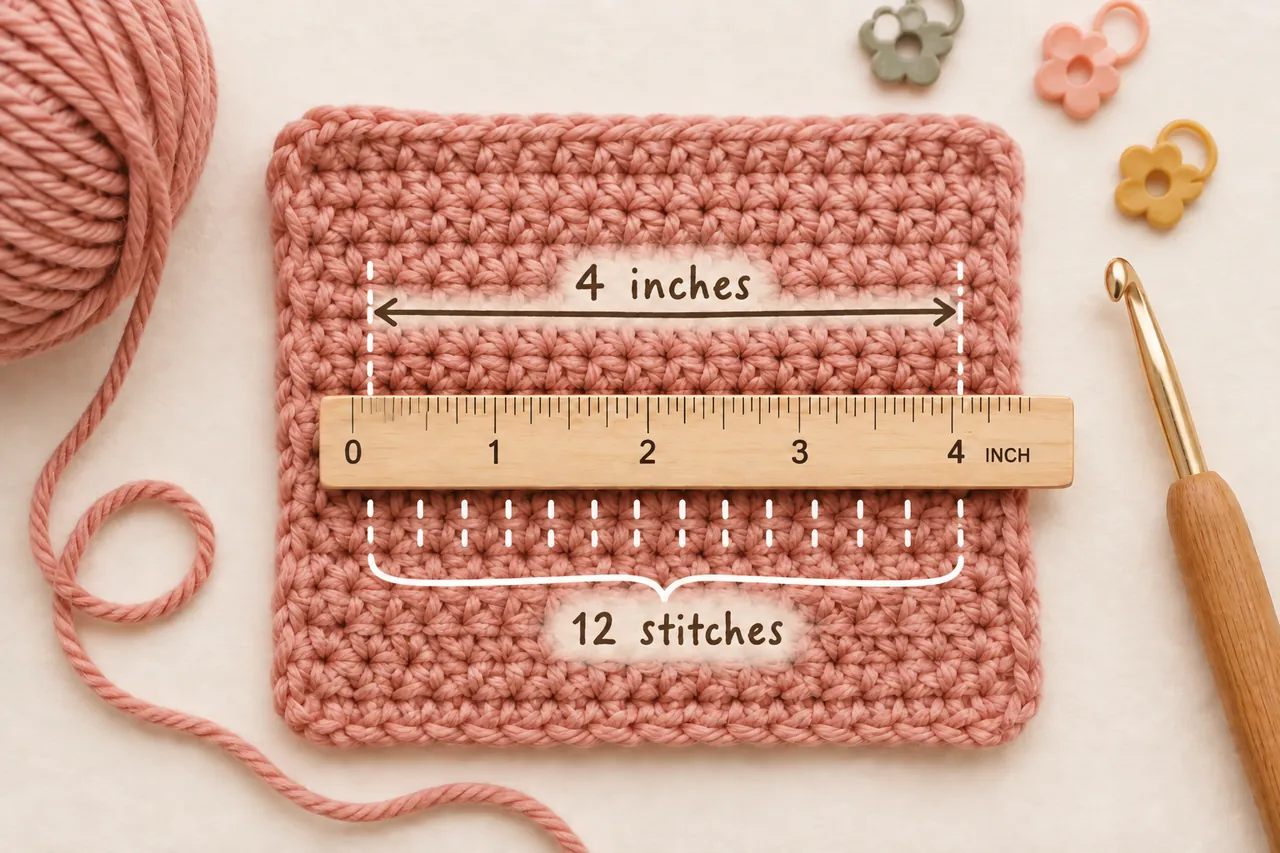
Your finished piece can be too big or too small even when the stitches look neat. Gauge matters most when fit or finished dimensions matter. Make a swatch larger than the measurement area, often at least 5 to 6 inches square, with the intended yarn and stitch pattern. Wash and dry or block it as the project will be treated, following the yarn care instructions. Measure a central 4-inch span without stretching, counting both stitches and rows, including fractions at the boundaries. More stitches than required means try a larger hook; fewer means try a smaller hook. Re-swatch after changes, and check row gauge too. If a simple practice square has no required finished size, matching a designer’s gauge may not be necessary.
10. Restarting when a smaller repair would do
One error a few rows back does not always require a full restart. Find the error before pulling anything out, then undo stitches slowly until the last correct stitch remains. Put your hook back into the live loop and rework the affected section; secure the loop with a removable marker if you pause. Never leave a marker in the current live loop while trying to pull that loop apart. Starting again can still be sensible for a tiny piece, a foundation-chain error, or a complicated pattern where a clean pickup is difficult. A harmless cosmetic wobble in a practice piece can also stay if you are happy with it.
Answers to common troubleshooting questions
Do I need to restart if my edges are uneven?
Count the stitches first. Mild waviness with the correct count may be cosmetic. Missing or extra stitches require correcting the affected section when they change the pattern or dimensions.
Can blocking fix uneven crochet?
Blocking may relax stitches and improve the shape, depending on the fiber. It cannot add missing stitches or remove extras. Follow the yarn’s care instructions; do not try to force incorrect stitch counts into shape.
Why does my crochet keep getting wider?
Look for two stitches worked into one spot or an extra stitch at a row edge. Check whether you are counting the turning chain and also working a stitch where it should replace one.
Should I always use the hook size on the yarn label?
Use it as a starting suggestion. The pattern, intended fabric, yarn, and your own gauge determine which hook works for the project.
Try what you've learned on a small, forgiving project
Spotting a mistake means you are learning to read your stitches. Practice one fix at a time on a small square or another simple project: change one variable, count after each row, and use removable markers to keep your place. Browse the Derpy Monster pattern library and choose a beginner-friendly project with clear instructions for your next attempt.

Written by
Adriana Maronese
I’m Adriana, the maker behind Derpy Monster. I love learning, making, and sharing the little discoveries that make crochet feel more joyful.
Keep the making going
What do you feel like making today?
Find your next pattern, collection, or tiny spark of inspiration.