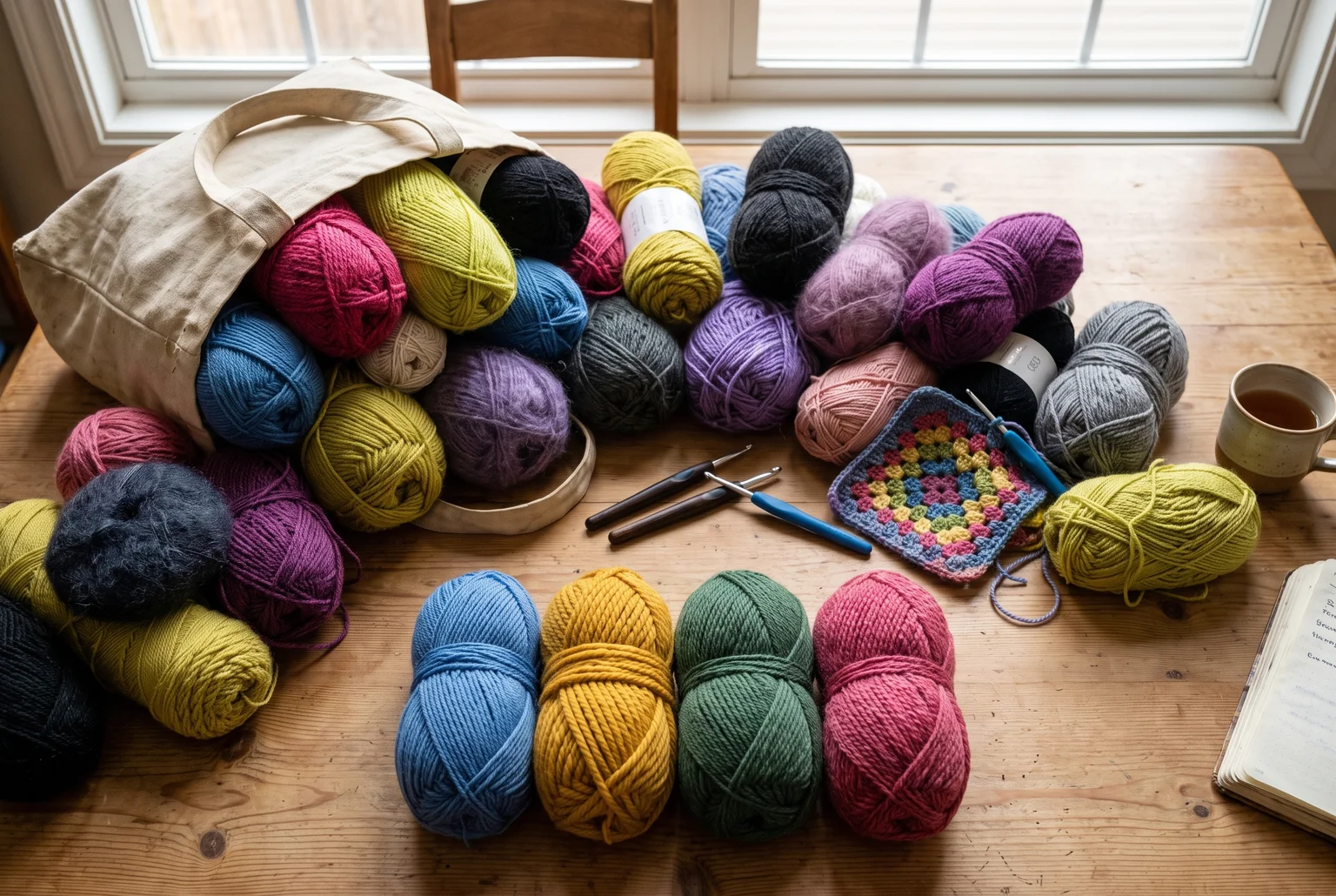
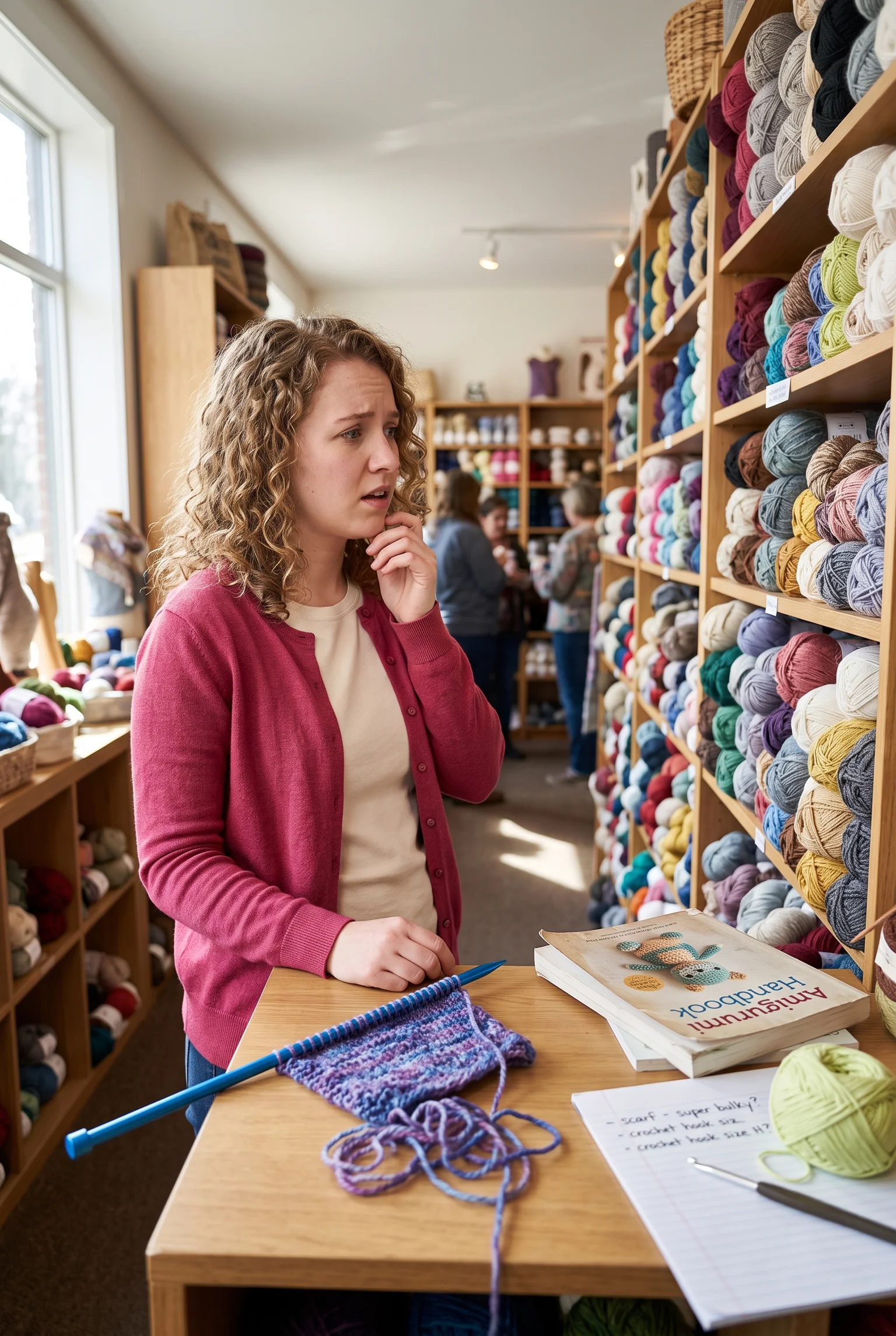
Standing at the yarn wall, not sure where to start
I remember my first yarn aisle trip like it was a horror movie. Rows of skeins, numbers I didn't understand, labels shouting "worsted" and "DK" like I was supposed to just know. I bought three wrong skeins before I made a single stitch.
You don't need to guess like I did. This guide walks through yarn weight, fiber type, and exactly what to grab for your first amigurumi, blanket, scarf, or sweater, so you can walk into a craft store (or scroll a website) and pick with confidence instead of panic.
What those numbers on the label actually mean
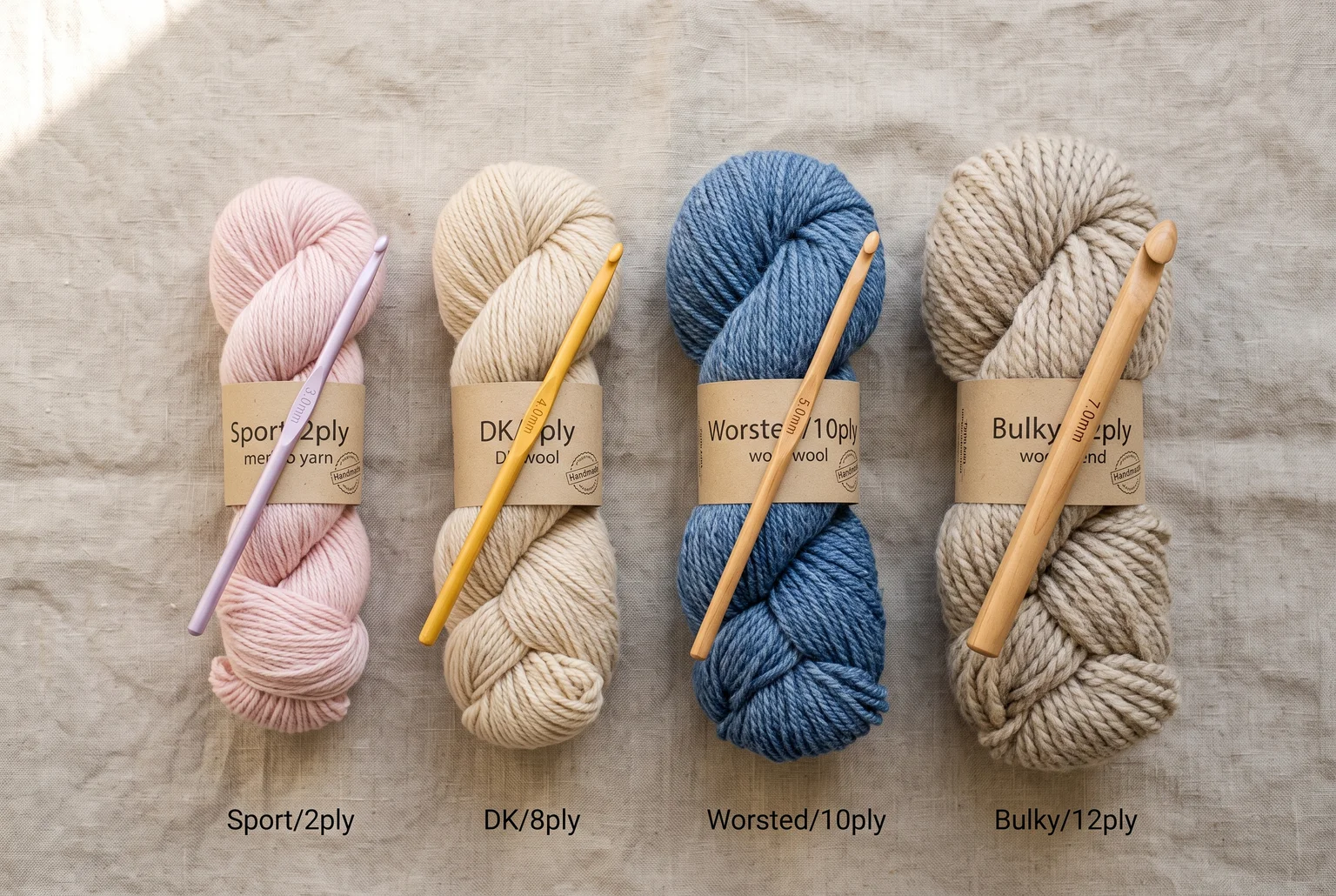
Yarn weight just describes how thick the strand is, nothing to do with how much a skein weighs or how skilled you need to be. The Craft Yarn Council sorts yarn into eight categories, numbered 0 through 7, running thin to thick. As a beginner, you really only need to know four of them.
Sport (category 2) is thin and drapey, good for lightweight items like baby cardigans. DK, short for double knit (category 3), sits between sport and worsted and works well for soft accessories. Worsted (category 4), sometimes called aran, is the yarn most patterns default to and is generally the most popular choice for blankets, hats, and amigurumi. Bulky (category 5) is noticeably thicker and lets a scarf grow in an evening instead of a week.
Hook sizes roughly track with weight: DK pairs with a 4.5 to 5.5mm hook, worsted with 5.5 to 6.5mm, bulky with 6.5 to 9mm. Treat those as starting points, not rules. Your pattern's hook size and a quick gauge swatch always win.
Fiber matters as much as weight
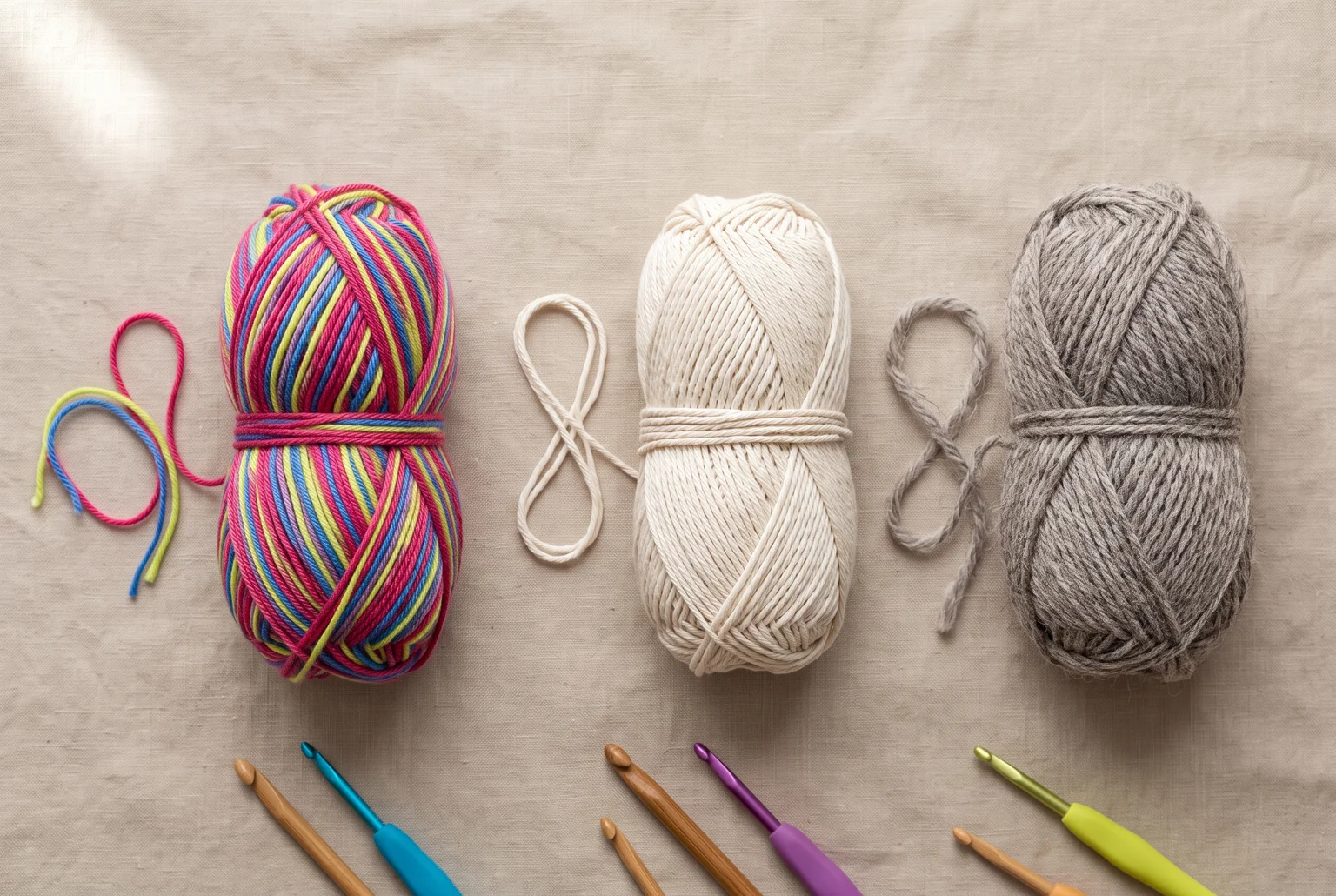
Acrylic is the beginner default for good reason. It is inexpensive and easy to care for, machine washable, and holds its shape without stretching or shrinking. It can feel a bit rough or plasticky depending on the brand, and it's less breathable, so it's not ideal for summer garments or anything that touches heat.
Cotton has more weight and structure, giving stitches sharp definition. It's a great fit for dishcloths and market bags, though it has less stretch and can be tougher on your hands over long sessions.
Wool is warm, elastic, and forgiving to work with, but most types need hand washing and aren't machine dryer safe.
Blends mix synthetic and natural fibers to balance softness, price, and easy care, which makes them a solid middle ground once you've tried the basics separately.
Yarn for amigurumi and stuffed toys
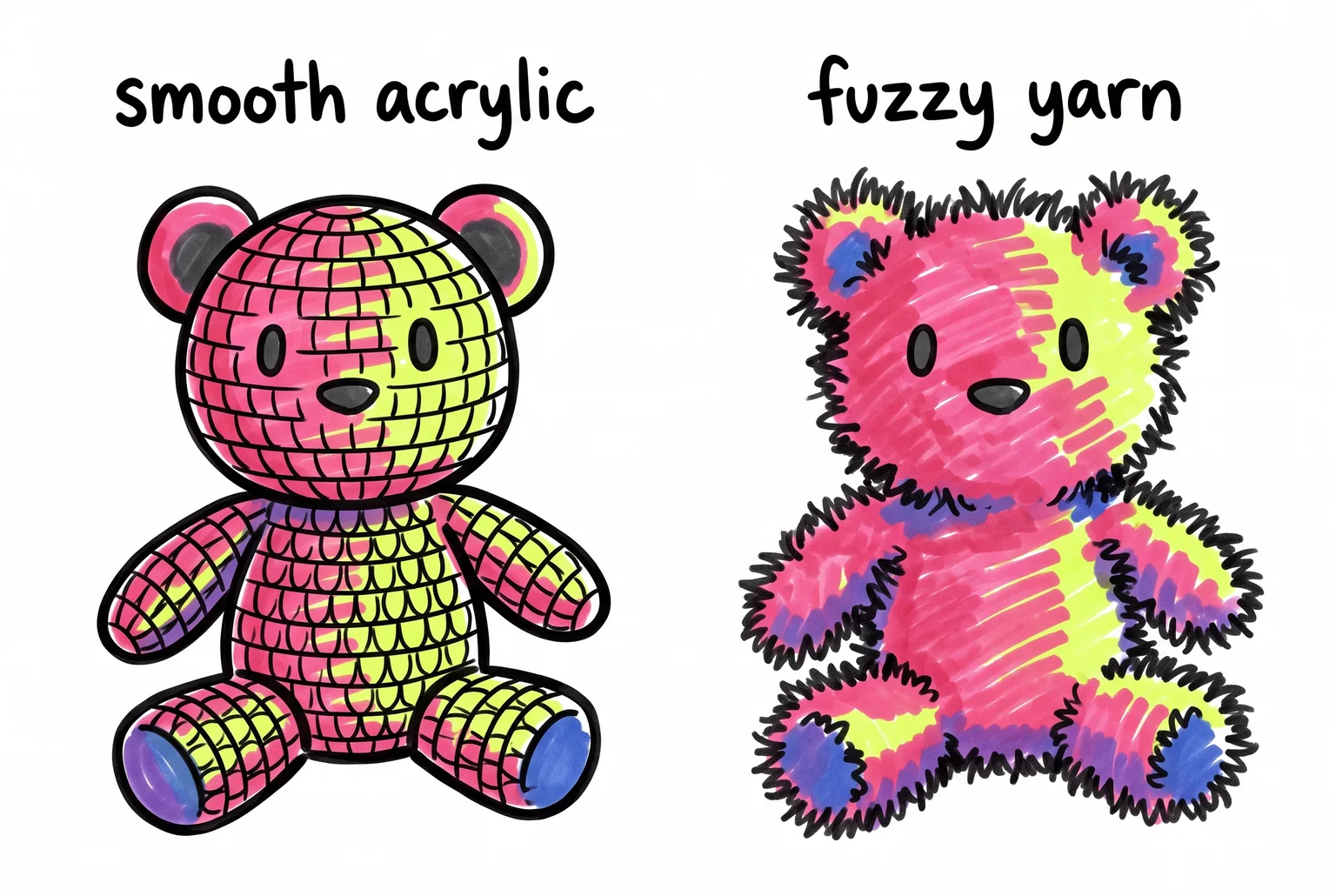
For amigurumi, worsted weight acrylic in a smooth, non-splitty style is the safe pick. You want tight stitch definition so stuffing doesn't peek through the gaps, and acrylic holds its shape while surviving the inevitable wash after a toy meets a toddler's snack hands.
Skip fuzzy or boucle yarns here. They look fun on the shelf but hide your stitches, which makes shaping ears, faces, and tiny limbs much harder to control. Projects like a baby rattle or a rounder shape like Percy the Penguin depend on clean stitches to keep the shape crisp.
Stick to a 4.0mm to 5.0mm hook for most worsted amigurumi patterns, going down a size from what the label suggests for extra-tight stitches.
Yarn for cozy, washable blankets
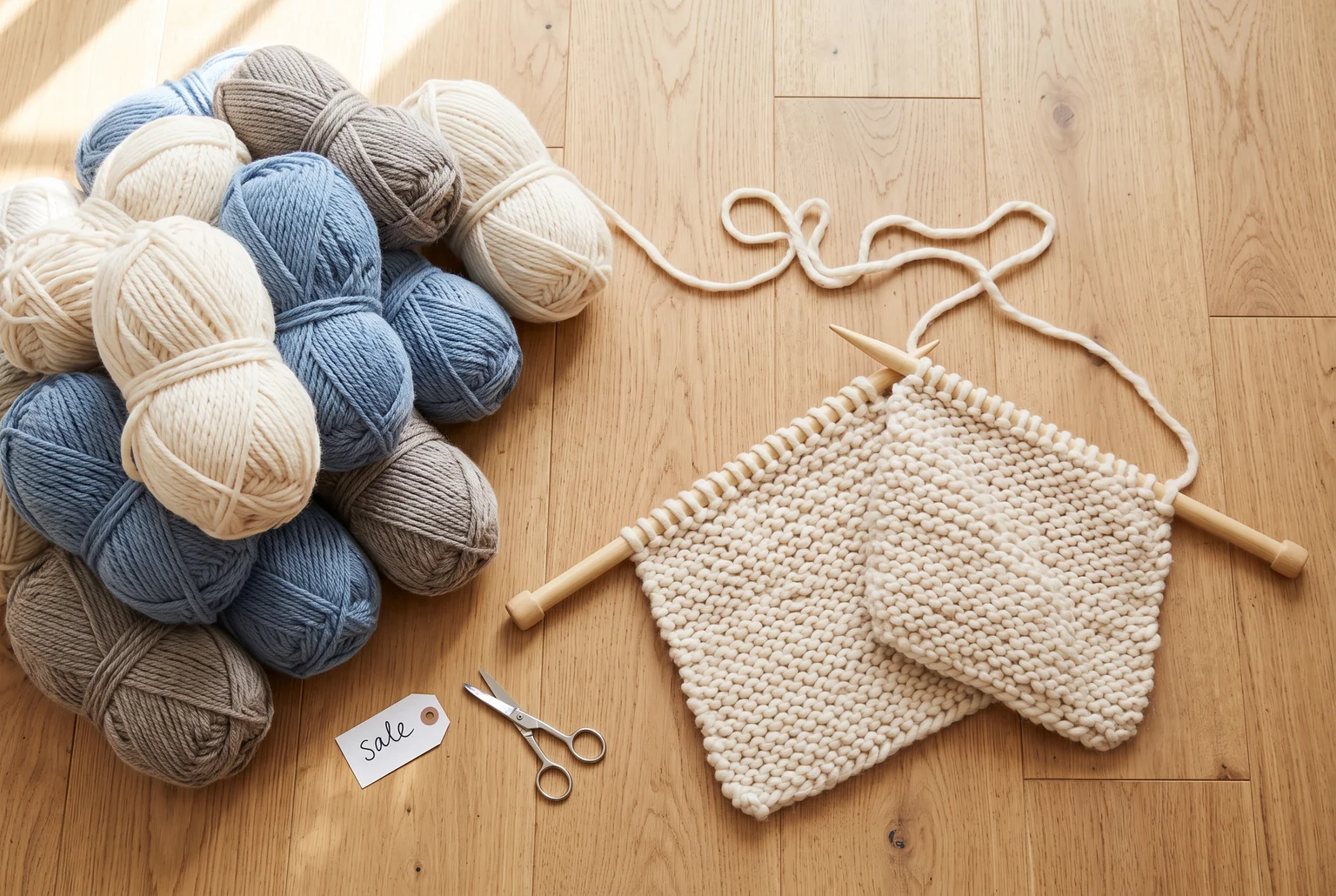
Blankets eat yarn fast, so budget and washability matter as much as softness. Worsted or bulky weight acrylic is the beginner's best bet: it works up quickly, machine washes without fuss, and comes in big skeins that keep costs manageable.
If you want a softer feel for a baby blanket, look for an acrylic-cotton or acrylic-wool blend labeled machine washable. Pure wool looks lovely but often needs hand washing, which is a hassle for something the size of a blanket.
Bulky weight also means fewer stitches overall, so your first blanket won't take months to finish.
Yarn for your first sweater or cardigan
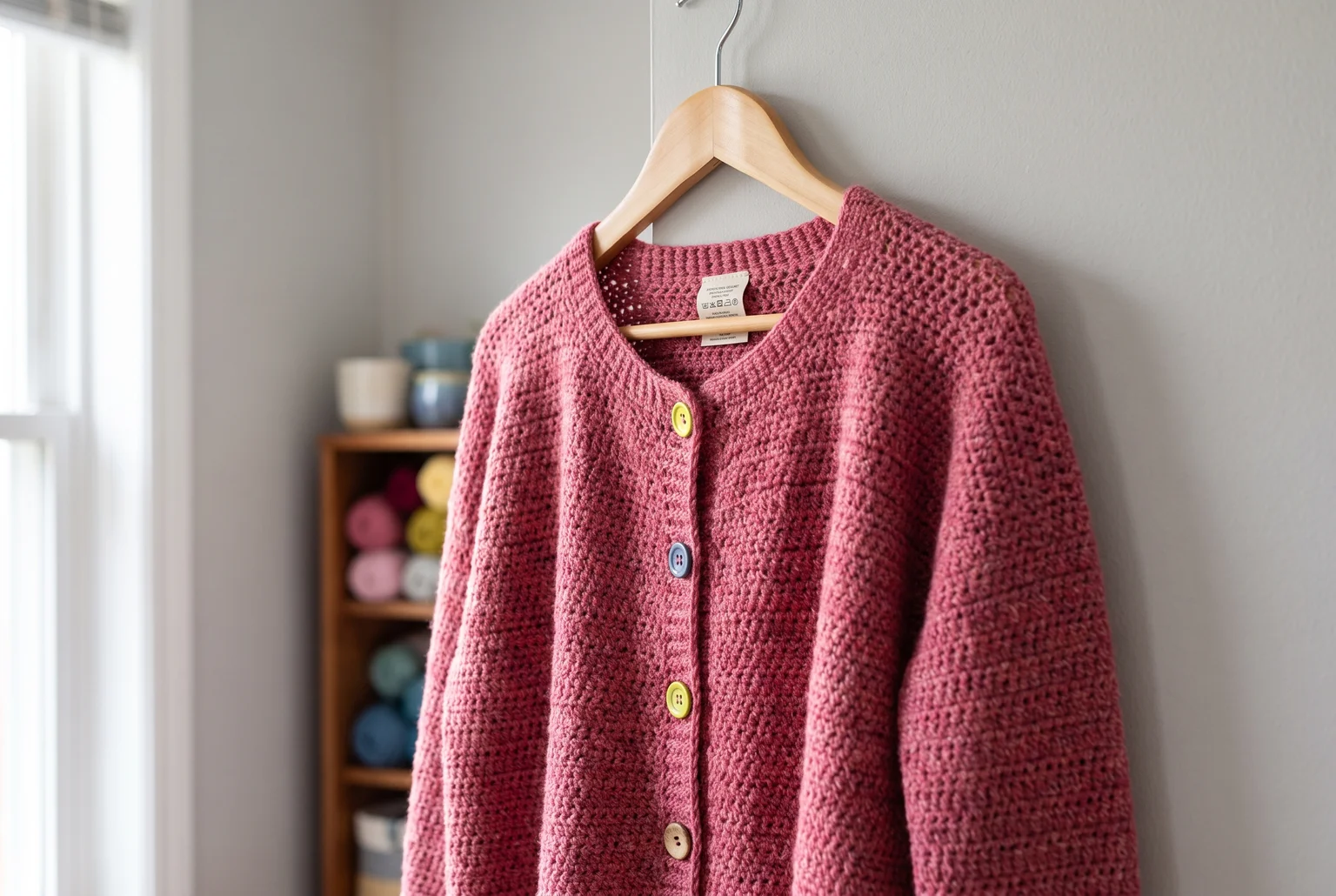
Garments are a step up. Fit, drape, and gauge actually matter here, so this isn't the best place to start crocheting. If you're ready, a DK or worsted weight wool blend gives you the stretch and drape a wearable needs without the stiffness of pure acrylic. Cotton can feel heavy and inelastic for garments, pulling them out of shape over a day of wear.
Check the label for care instructions before you commit. Hand-wash-only wool is fine for a scarf, less fine for a sweater you want to wear weekly.
Yarn for scarves, cowls, and beanies
Scarves and hats are the easiest place to start, and worsted weight acrylic or an acrylic-wool blend is the safest first buy. It's forgiving on tension, soft enough to wear against the neck, and cheap enough that a wonky first attempt doesn't sting. For hats, a bit of wool blended in helps stitches hold their shape around the head instead of going floppy.
If you want a project that won't eat your whole yarn budget, look for patterns sized to a single skein. Our one-skein scarf collection is built around exactly this kind of yarn, so you can start without guessing how much to buy.
What to check before you buy
Grab the label and check three things: weight (the little number, 4 for worsted), fiber content, and yardage. Buy an extra skein if your project is bigger than one ball, dye lots can vary and running short mid-blanket is no fun.
Feel the yarn if you can. It should feel pleasant against your skin, not scratchy, especially for wearables.
Don't buy based on color alone. A gorgeous skein in the wrong weight will fight you the whole project.
Start cheap. A basic acrylic worsted lets you practice without worrying about wasting expensive yarn on a first attempt.
You know enough now to walk into that yarn aisle and grab exactly what you need. Go pick your first skein.

Written by
Adriana Maronese
I’m Adriana, the maker behind Derpy Monster. I love learning, making, and sharing the little discoveries that make crochet feel more joyful.
Keep the making going
What do you feel like making today?
Find your next pattern, collection, or tiny spark of inspiration.